Case Study — Level Design PC · Unreal Engine 5.5 · 2026

Level Design System
Shovel Out

Designing 26 levels across a modular hotel built from ~20 reusable room prefabs. Structural flow, encounter placement, art variation and playtesting iterations.

26Levels
~20Room prefabs
3Chapters
UE 5.5Engine
My role: Solo Level Designer Narrative beats: team collaboration Room prefabs: solo Encounter design: solo

//Hotel Cotard has infinite floors.
We designed 26 of them.

Shovel Out is structured around a hotel with an infinite number of floors. Each gameplay level is one floor — a self-contained space with its own encounter logic, pacing beat and art direction. The game is divided into a Prologue and two Chapters, each escalating in enemy density, ability complexity and environmental mood.

Prologue
The Dream
The Stageintro
The Backstage
The Sewers
Janitor Closet
Learn: shovel, revolver, movement
Chapter 1
Owner: Hospod
Grievatorium2 lvls
Wild Ghosts3 lvls
Ghost's Honky Tonk2 lvls
Boss: Horatio
Introduce: ghosts, dodge, elemental bullets
Chapter 2 — In Production
Owner: Dustin
The Cardinal Rule2 lvls
Fontaine's Barstory
TV Fever2/3 lvls
Star of the Showstory
Status: planned · Release July 2026
Finale
FIN.
Boss: The Boss
Rozmowa z Sindy
The End
Standard level
Wild Ghosts — this case study
Boss encounter

//One hotel. ~20 rooms.
Infinite configurations.

Every level is assembled from a library of ~20 room prefabs — self-contained spatial units combined and lightly modified per level. Each level = 3 rooms. The same prefab appears across chapters with different art, enemy layout and lighting.

Room Prefab Library (~20)
Lobby Hall
Corridor A
Corridor B
Bar Counter
Storage
Stage Area
Bedroom
Kitchen
Boiler Room
TV Lounge
Elevator
Sewer
Office
Chapel
Dance Floor
Back Alley
Janitor
Rooftop
Archives
+ more

Highlighted = used in Wild Ghosts · Hover to explore

Level = 3 Rooms
Room 1Entry encounter · introduce enemies
Room 2Core challenge · main encounter
Room 3Reward / exit · pacing breath

Enemy spawns, item placement and cover positions adjusted per level within fixed prefab architecture.

Chapter = Multiple Levels
Grievatorium 2 lvls
Wild Ghosts 3 lvls ←
Ghost's Honky Tonk 2 lvls
Boss: Horatio boss

Escalate difficulty across levels, release tension at story beats, climax at boss.

//Wild Ghosts

The second location in Chapter 1 — a three-level arc introducing ghosts as a new enemy type. Ghosts phase through cover and attack from unexpected angles, forcing players to rethink the cover habits built in the Prologue.
Chapter
Chapter 1 — Owner: Hospod
Enemy introduction
Ghosts — first appearance
Levels in arc
3 gameplay levels
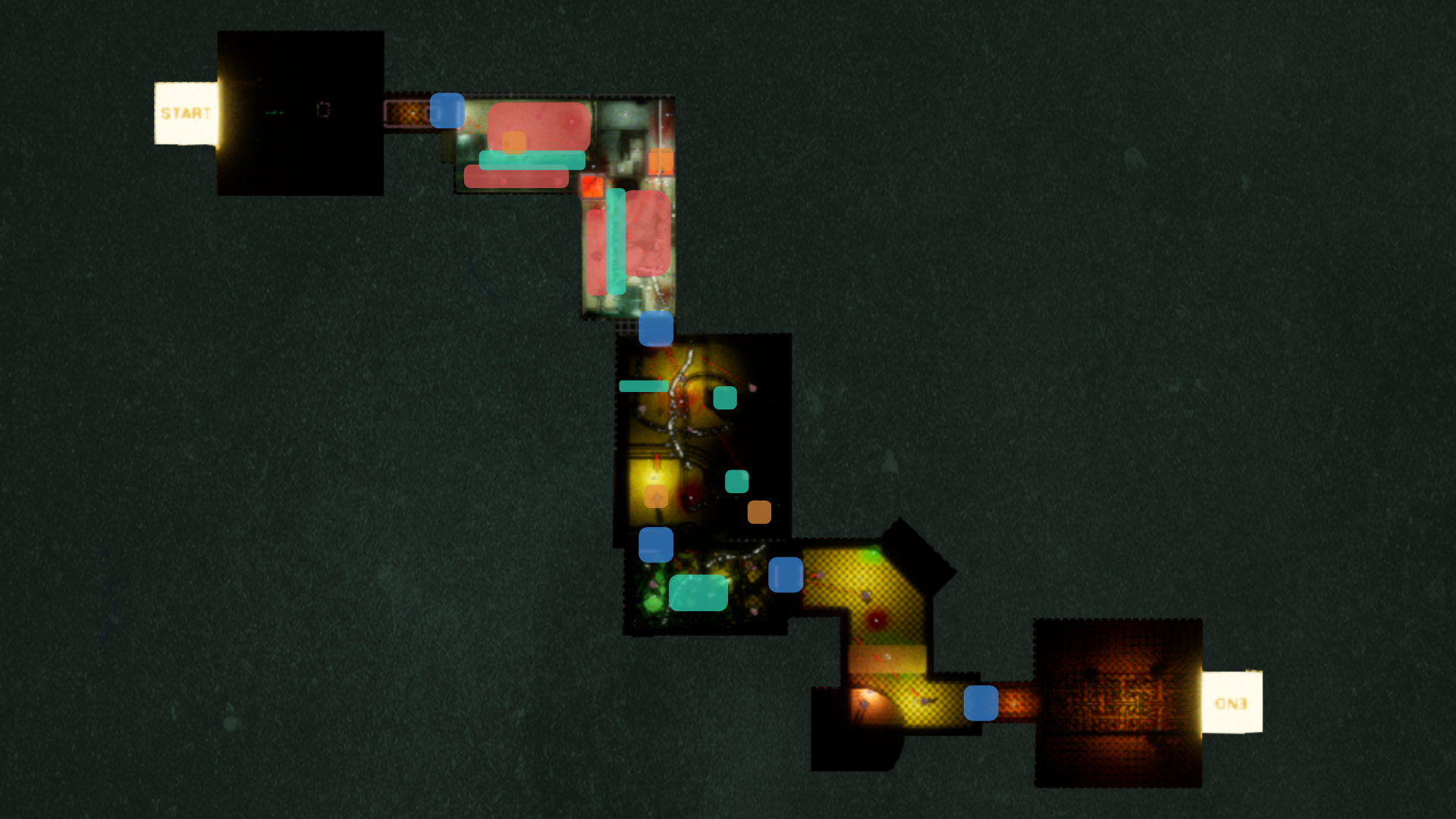
Wild Ghosts — top-down orthographic view of the encounter layout
Combat Zones
Ghost spawn clusters — open space for phase attack angles
Cover Objects
Furniture deliberately ineffective — breaks cover habit from Prologue
Entry / Exit
Single entry forces engagement · exit gated by encounter clear
Pickups / Reward
Health and ammo past the encounter — reward for pushing through
01
Breaking cover habits
The Prologue trains players to rely on cover. Wild Ghosts uses the same room layouts — but ghosts phase through walls. Familiar space becomes threatening through enemy behaviour, not level redesign.
02
Open combat arena
Central rooms are wider than earlier Ch1 levels. Ghosts need space to flank and phase — cramped spaces make their ability unfair. Open space turns it into a skill challenge.
03
3-level escalation
1 ghost (learn) → 3 ghosts (apply) → 5 ghosts + skeletons (master). Same prefabs, different spawn counts. The architecture teaches before it tests.
04
Reward placement logic
Pickups placed past the encounter zone. Players can't resource-stall — they must push through to heal. Keeps combat pressure high and prevents passive play.

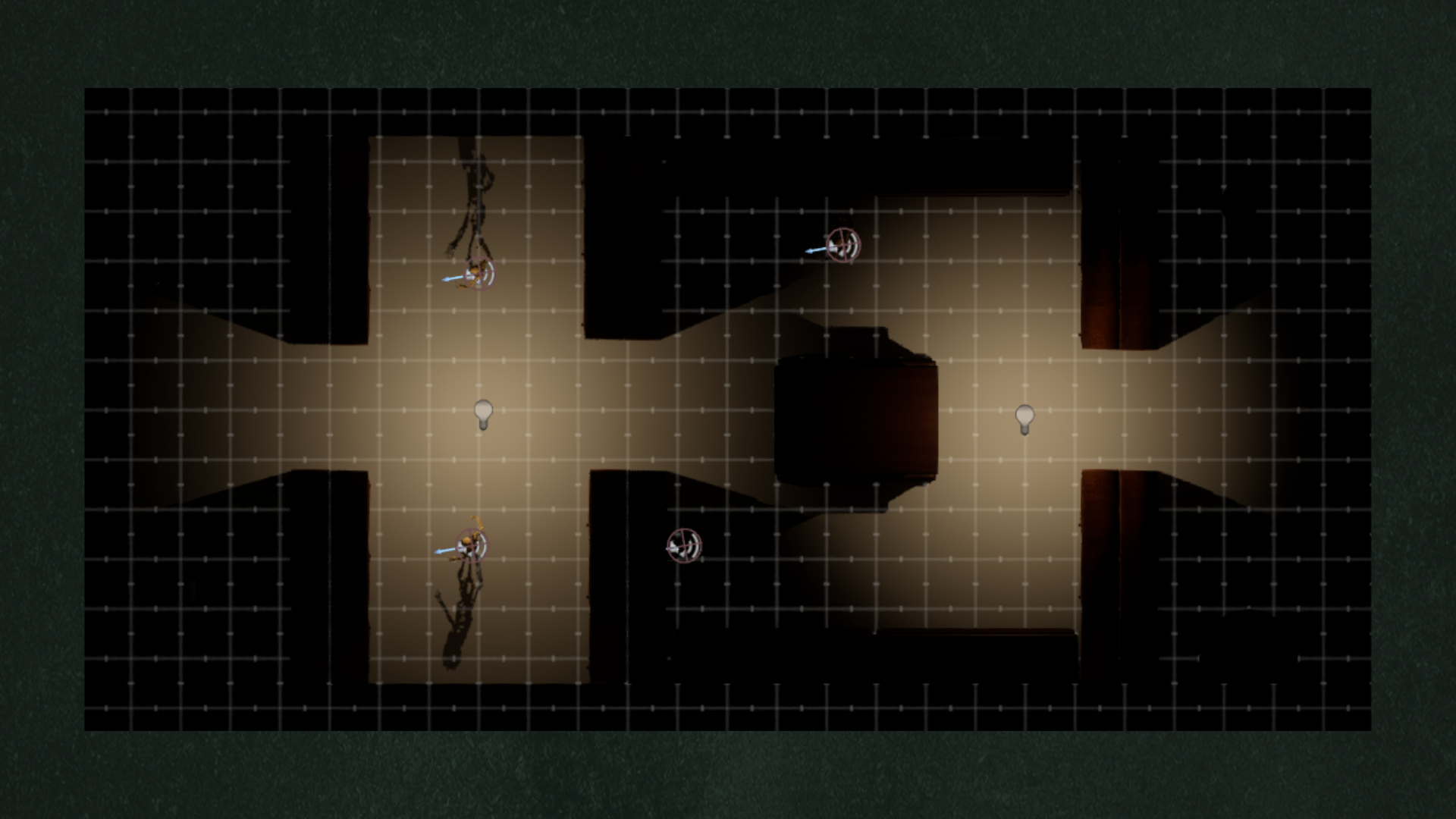
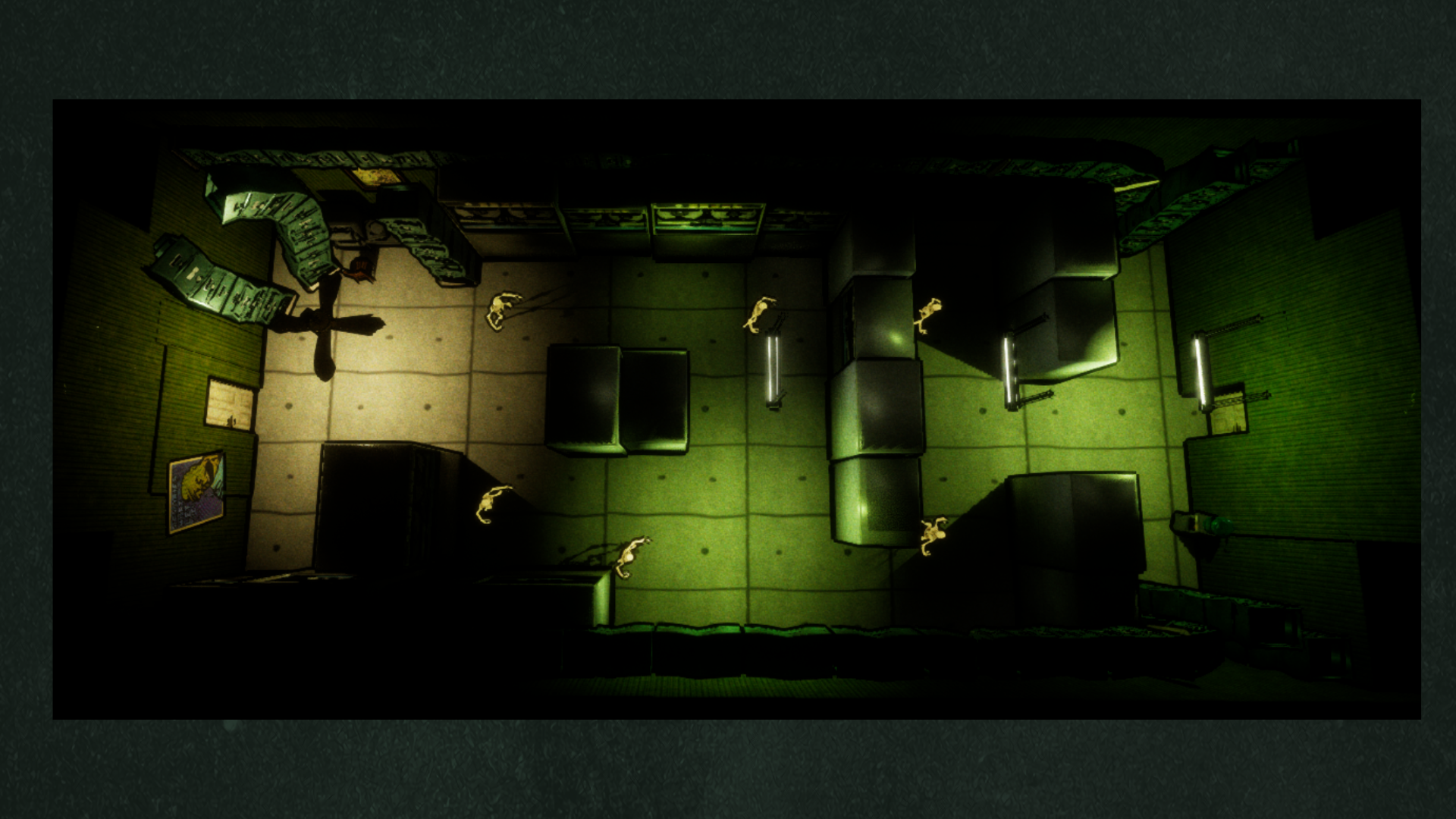
//Same room. Different floor.
Different feel.

The modular system works only if the same prefab feels distinct across sub-locations. Within Chapter 1 alone, the same room architecture appears in multiple floors — identical layout, completely different mood. Lighting, prop density and color palette do all the heavy lifting.
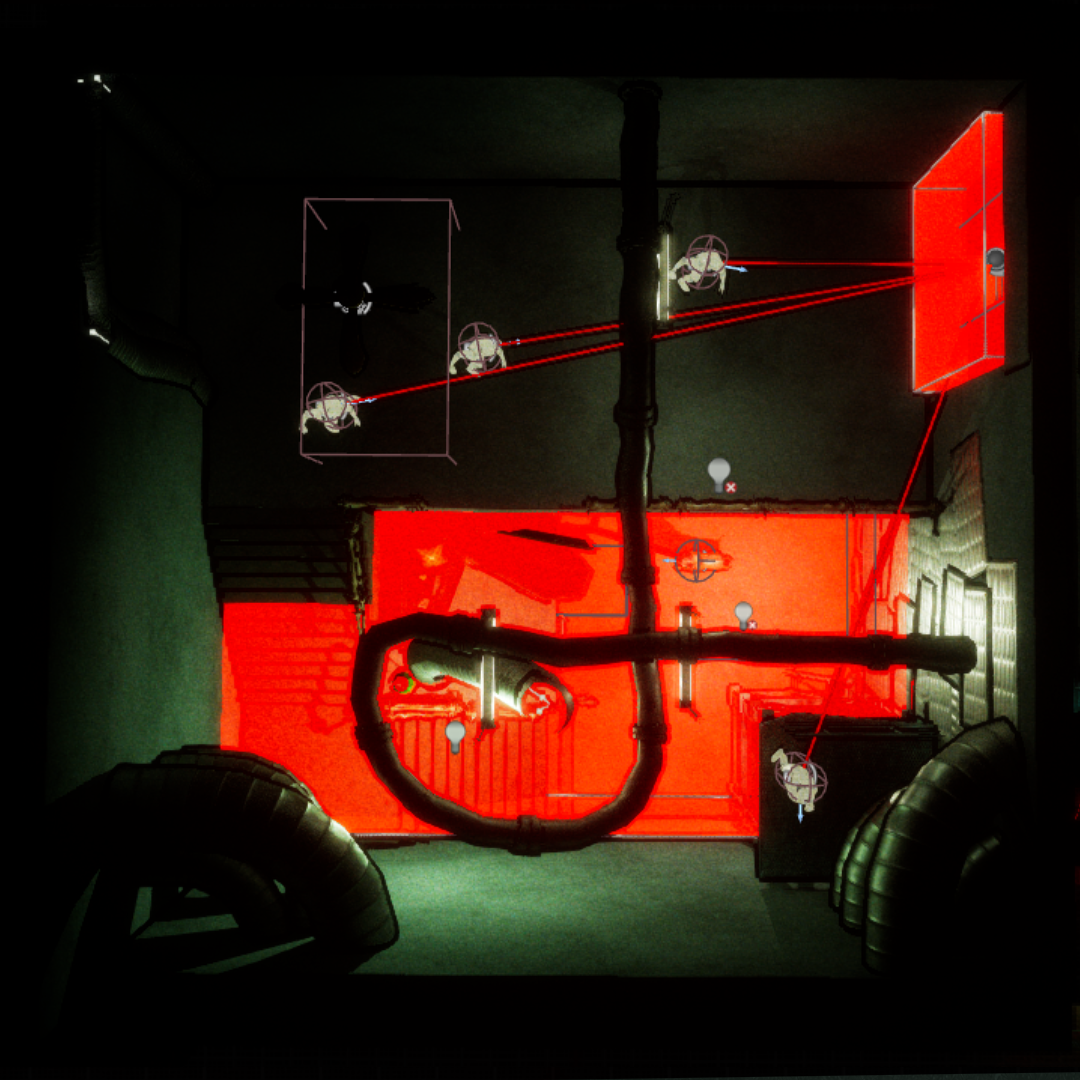
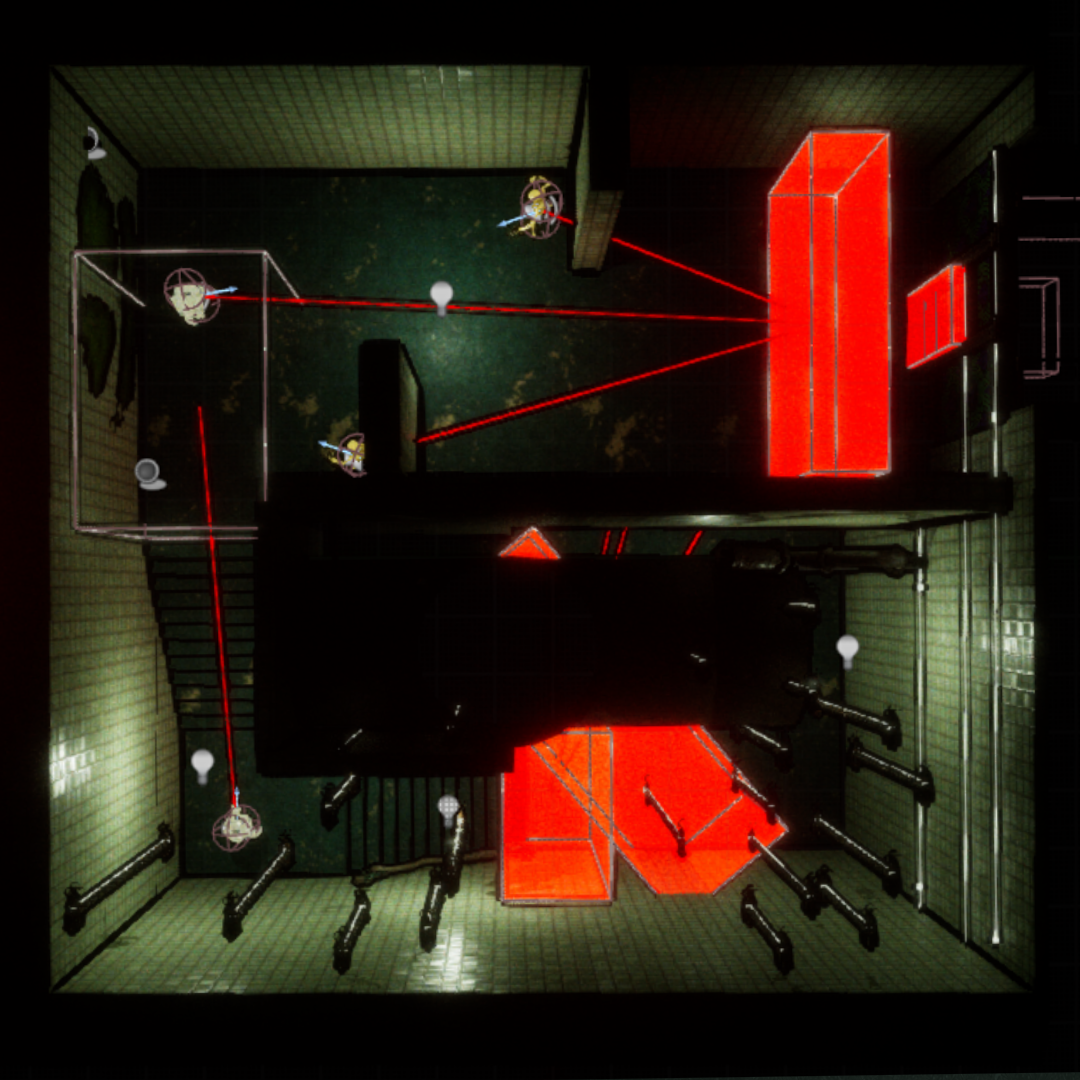
Same room prefab — Grievatorium, warm red atmosphere
Chapter 1 — Grievatorium
Warm & Hostile
Dense red practicals, hot shadows, crowded prop layout. The room feels oppressive — skeletons own this space.
Same room prefab — Wild Ghosts, cold spectral atmosphere
Chapter 1 — Wild Ghosts
Cold & Spectral
Desaturated green-grey, cold fluorescents, sparse props. Open space signals danger. Ghosts own this floor.
In Production
Chapter 2 — TBA
Art direction finalized internally.
Release July 2026.
Chapter 2 — Owner: Dustin
Unrevealed
Not yet public.

//What playtesting taught me

Every Wild Ghosts level went through at least two playtesting rounds. The most significant changes came from observing how players misread ghost behaviour in the first encounter.
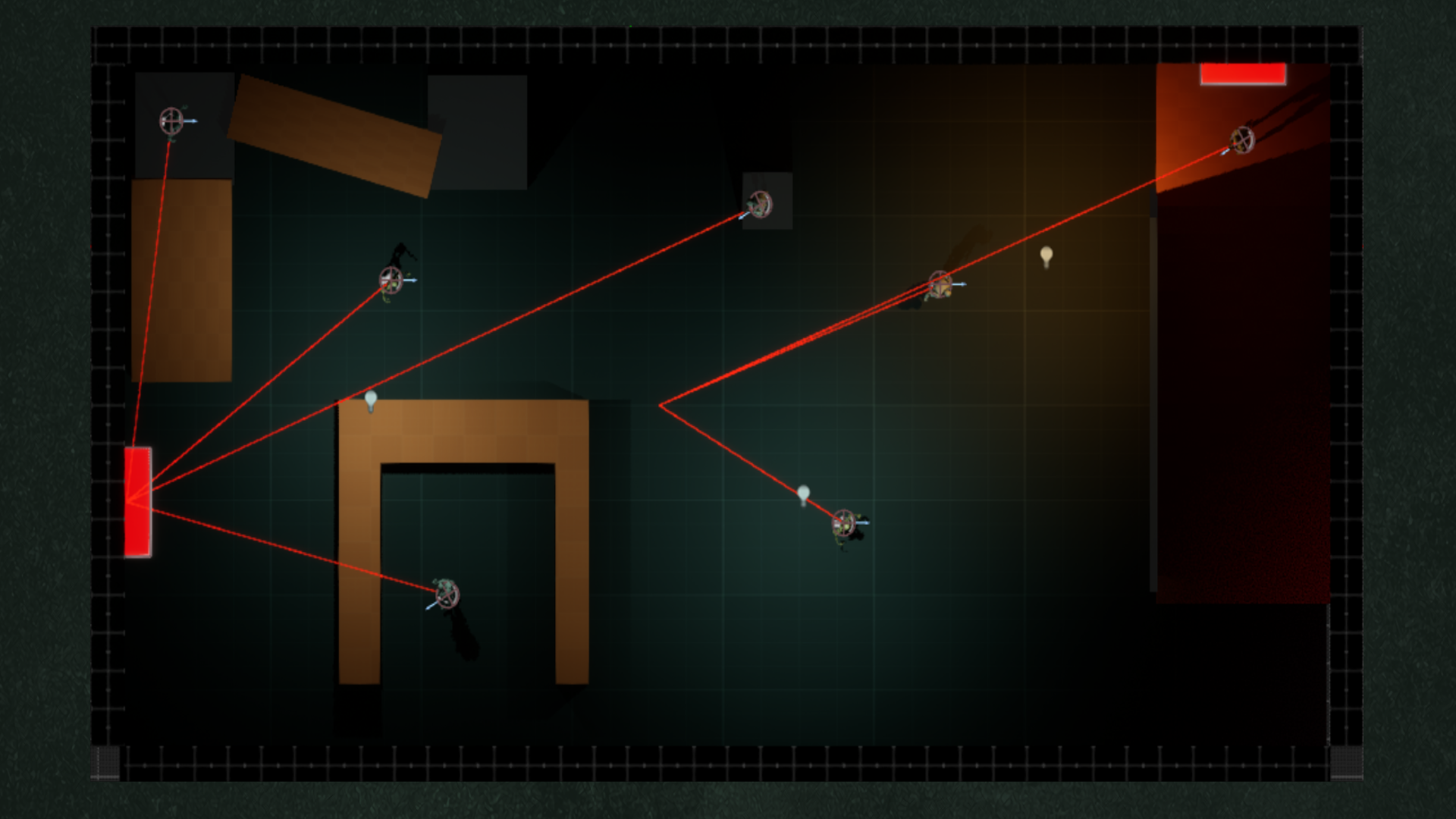
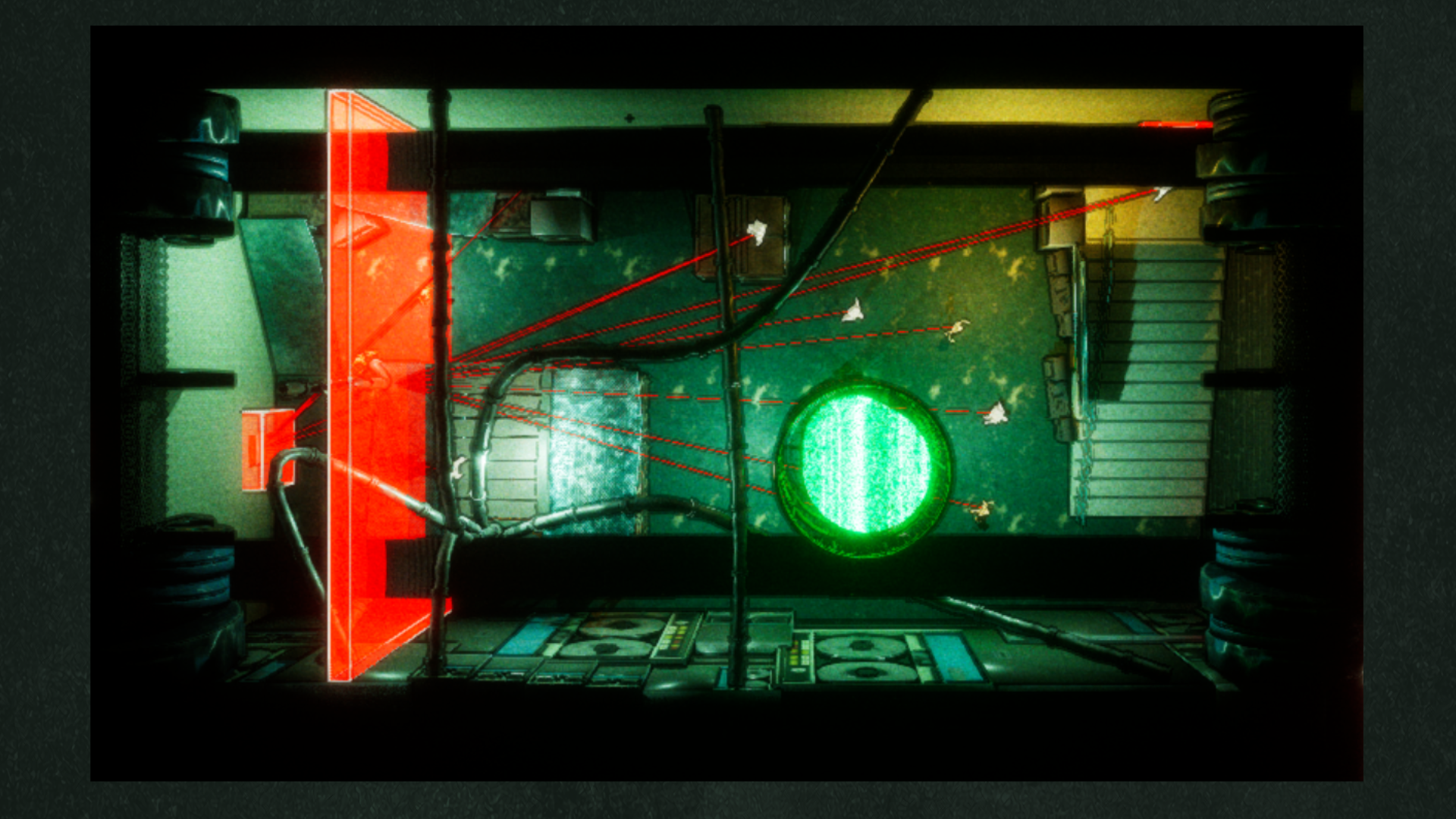
Blockout v1 — ghost spawns behind cover, unreadable layout
Problem — Playtest v1
Players didn't notice ghosts phasing
Ghosts spawned behind cover. Testers were confused when damage came through walls — thought it was a bug, not a mechanic. The ability wasn't readable from the layout.
Final layout — first ghost in open centre, clear sightlines
Solution — Playtest v2
First ghost spawns in plain sight
Moved first spawn to room centre with clear sightline. Added visual tell before the phase. Second encounter reintroduced cover as a deliberate trap. Confusion dropped significantly.
Blockout v1 — exit accessible before encounter cleared
Problem — Playtest v1
Exit found before encounter cleared
Players found the exit early and tried to skip the ghost encounter. Level felt incomplete, ghost introduction lost its impact.
Final layout — exit gated behind encounter zone
Solution — v2
Exit gated by encounter clear
Exit activates only after all ghosts eliminated. Door placed at the back of room — reachable only after crossing the encounter zone. Both visual and mechanical gate.
Engine
Unreal Engine 5.5
Scripting
Blueprints
Level design
Dustin Smela — solo
Room prefab system
Dustin Smela — solo
Encounter design
Dustin Smela — solo
Narrative beats
Team collaboration
Publisher
Lewd Circus / Indie Starters Game
Release
July 2026 — PC